Lose Baby Weight After Pregnancy
Customized postpartum personal training to help women lose baby weight, rebuild strength, restore confidence, and feel like themselves again—at a pace that fits their recovery, schedule, and real life.
“I’m the strongest, healthiest and slimmest I’ve ever been.” — Elizabeth B., Mother of Two
Lose the Baby Weight. Build a Stronger Body.
You can be proud of what your body has accomplished and excited about what you want to accomplish next.
After pregnancy, many women want to lose the weight they gained, rebuild strength, improve their shape, and feel confident in the way their body looks, moves, and performs.
That may mean fitting comfortably into favorite clothes again. Developing a firmer, more athletic shape. Rebuilding core and full-body strength. Having more energy for work, family, and everything else life demands.
It may also mean becoming stronger and more confident than you were even before pregnancy.
Some women begin working toward those goals a few months after delivery. Others reach out a year—or several years—after their child was born.
There is no expiration date on wanting to lose the weight, rebuild your strength, and create a body you feel great in.
Whether your baby is a few months old or your child is already in school, your program should begin with where your body and life are today.
Pregnancy, delivery, recovery, current symptoms, sleep, feeding, schedule, previous fitness experience, and the way your body feels now will be different for every woman. Your training and nutrition should reflect those differences rather than forcing your body into someone else’s program or timeline.
Extreme diets and punishing workouts are not the answer. You need a plan that helps you make meaningful progress while respecting your recovery, responsibilities, and real life.
Your body has already done something amazing. Now you can decide what you want to build next.
Denise M. — Mother of Two
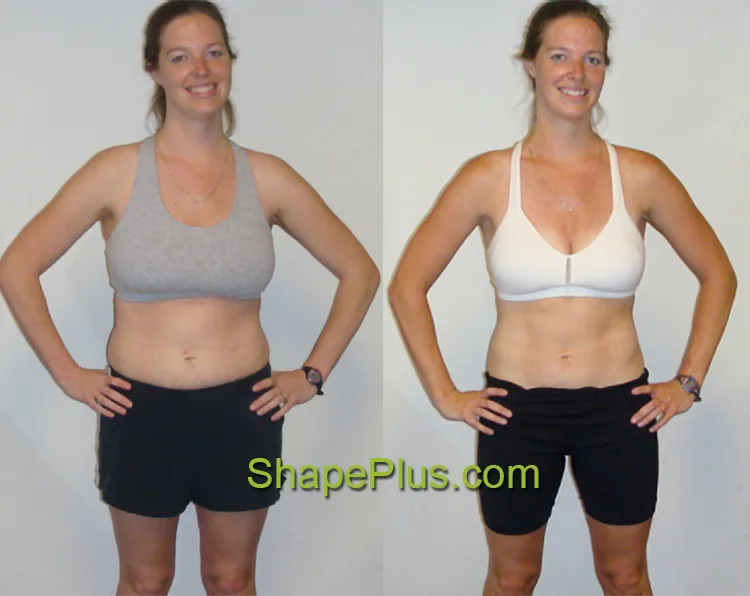
“My body looks better now than it ever has. More than just physical though, I feel better mentally than I ever have.”
There’s no guarantee of specific results.
Results can vary.
What It Takes to Lose Baby Weight After Pregnancy
Losing baby weight is not about finding one perfect diet, doing endless cardio, or trying to force your body back into shape as quickly as possible.
It takes a plan that brings the right pieces together.
Your nutrition must support fat loss while still giving you enough energy to train, recover, work, care for your family, and handle everything your day requires. If you are breastfeeding, your food intake should also reflect your individual energy and nutritional needs—not an aggressive, one-size-fits-all calorie target.
Strength training helps rebuild the muscle and physical ability that pregnancy, time away from exercise, or years of putting yourself last may have changed. It can help create a firmer, stronger, more athletic shape while improving the way your body moves and performs.
Cardio and conditioning can support fat loss, endurance, and overall fitness, but they should complement your strength training—not replace it or leave you too exhausted to recover.
Recovery matters too. Sleep may not always be ideal when you have a baby or young children, but your training volume, exercise selection, nutrition, and schedule can still be adjusted around the recovery you realistically have.
For women beginning soon after delivery, the return to exercise should also reflect the type of delivery, current symptoms, complications, recovery, and guidance from a healthcare provider. A woman starting several years later will have a different set of needs and considerations.
The plan should meet you where you are now—not where a calendar says you should be.
That is why consistency matters more than trying to make every workout harder or every day of eating perfect. You need an approach you can repeat through busy mornings, unpredictable schedules, family responsibilities, and real life.
Your training, nutrition, cardio, recovery, accountability, and progress tracking should all work together around your body and your goal.
Losing the baby weight is not one action. It is the result of the right actions working together consistently.
Jamie C. — Mother of Two
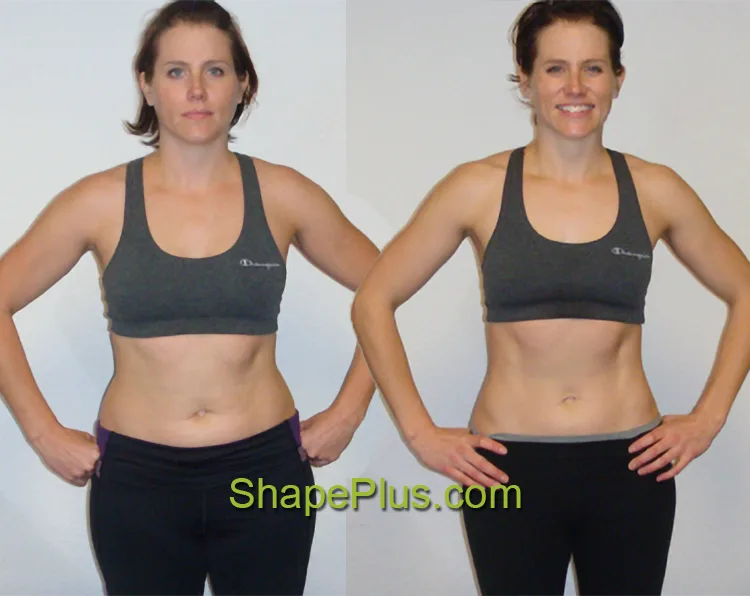
“I decided it was time to get serious about losing weight and getting myself back into good shape.”
There’s no guarantee of specific results.
Results can vary.
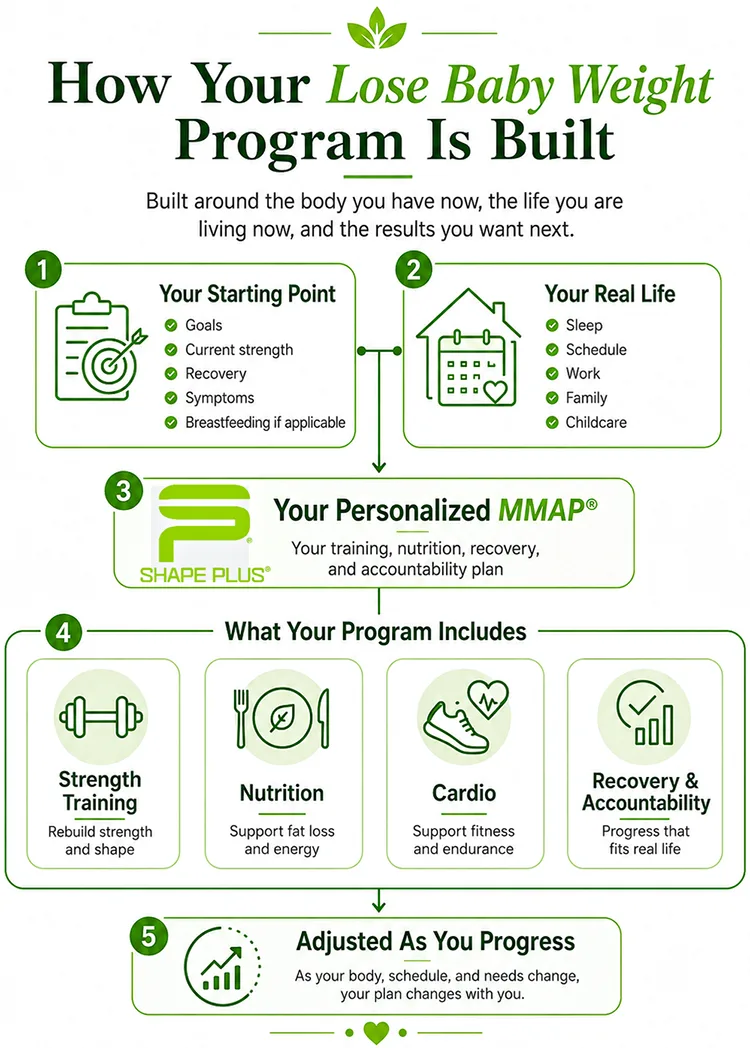
How Your Lose Baby Weight Program Is Built
Your program should be built around the body you have now, the life you are living now, and the results you want next.
Before choosing exercises or setting nutrition targets, we need to understand your starting point.
How much weight do you want to lose? What changes do you want to see in your shape? How strong and active are you now? How long has it been since your pregnancy? Are you breastfeeding? Are there symptoms, injuries, medical considerations, or previous exercise experiences that need to be taken into account?
We also need to understand what your days actually look like.
A woman caring for a newborn on interrupted sleep has different needs than a mother whose children are already in school. A woman returning to exercise shortly after receiving medical clearance may need a different starting point than someone who has been trying unsuccessfully to lose the weight for several years.
Your program should never assume that every mother has the same body, schedule, recovery, or goal.
Your strength training is selected to help rebuild muscle, improve movement, increase physical ability, and develop the firmer, stronger shape you want. Exercises, resistance, repetitions, training volume, and progression are adjusted around your experience, current abilities, and how your body responds.
Your nutrition plan is designed around fat loss, energy, food preferences, family life, and the amount of structure you can realistically follow. If you are breastfeeding, that becomes part of the planning rather than something ignored by a generic diet. Any guidance from your physician or healthcare provider can be built into your plan as well.
Cardio and conditioning are added in the amount and form that support your goal without unnecessarily draining the energy you need for strength training, recovery, work, and family.
Your schedule matters too. The best plan on paper will not help if it cannot survive busy mornings, childcare changes, work demands, travel, poor sleep, and the unexpected parts of motherhood.
Your training, nutrition, recovery, accountability, and progress tracking work together through your individual MMAP®—your Massive Multiple Action Plan®.
As your strength, weight, measurements, energy, schedule, and needs change, your plan changes with you.
You are not expected to organize your life around the program. The program should be organized around your life.
What an Effective Lose Baby Weight Program Should Include
The exact exercises, nutrition targets, and rate of progression will be different for every woman, but an effective program should include the essential pieces that work together to help her lose weight, rebuild strength, improve her shape, and feel confident in her body.
- Coach-guided strength training
Focused sessions built around your current abilities, goals, schedule, and readiness to progress. - Personalized exercise selection
Movements chosen for your body, previous fitness experience, delivery and recovery history, current symptoms, injuries, and the areas you most want to strengthen or reshape. - Progressive resistance
Gradually increasing the weight, repetitions, control, difficulty, or productive training volume as your strength and confidence improve. - Full-body strength and development
Training designed to rebuild your core and total-body strength while developing the firmer, stronger, more athletic shape you want. - Proper form and coaching
Guidance that helps you move well, use the intended muscles, and get more value from every repetition. - Personalized nutrition support
A realistic plan designed around fat loss, energy, food preferences, family meals, work, breastfeeding considerations when applicable, and the structure you can consistently follow. - Cardio and conditioning
Added in the amount and form that support fat loss, endurance, and overall fitness without unnecessarily interfering with strength, energy, or recovery. - Recovery built into the plan
Sleep, stress, training frequency, workload, schedule, and the realities of caring for a baby or children considered when the program is designed and adjusted. - Progress tracking and accountability
Monitoring weight, measurements, strength, clothing fit, progress pictures, energy, consistency, and other meaningful changes so the plan can continue moving you forward.
A list of workouts and a calorie target are not enough. Every part of the program should have a purpose, and every part should work with the others.
The goal is not simply to lose weight. The goal is to build a stronger body and create results you can maintain in the life you actually live.
Elizabeth B. — Mother of Two
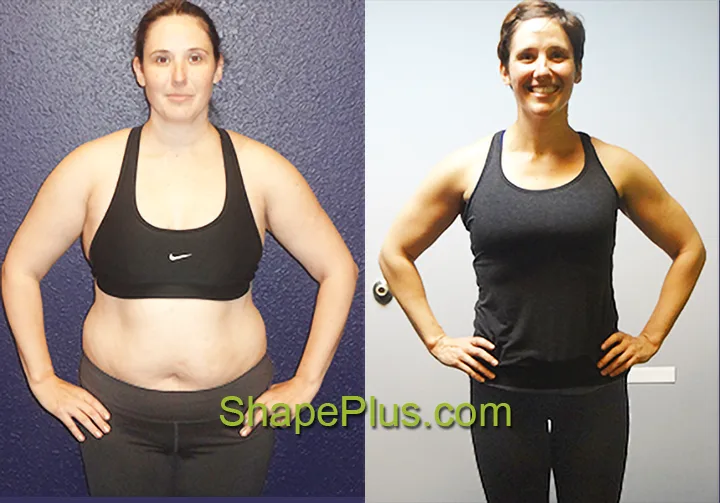
“Shape Plus personal training was there to support and see me through this journey.”
There’s no guarantee of specific results.
Results can vary.
Lose Baby Weight After Pregnancy FAQs
When can I start exercising after having a baby?
The right time depends on your delivery, recovery, current symptoms, and guidance from your healthcare provider.
After an uncomplicated vaginal delivery, some women may be able to begin light activity within days or whenever they feel ready. After a cesarean birth or a delivery involving medical or surgical complications, your obstetrician should help determine when and how you can safely return to exercise.
Starting to move again does not mean immediately returning to your previous workouts. Your exercises, resistance, training volume, and intensity should begin at a level your body is prepared to handle and progress as your strength, movement, and confidence return.
Your personalized program considers how long it has been since delivery, your recovery, previous fitness experience, symptoms, schedule, and current abilities.
The goal is not to return as quickly as possible. The goal is to return in a way that keeps moving you forward.
How long does it take to lose baby weight?
There is no single timeline that applies to every woman.
How quickly you lose weight will depend on how much you want to lose, your starting point, nutrition, activity, sleep, stress, breastfeeding, consistency, and the amount of structure your life currently allows.
Some women begin making progress within the first several weeks of following a structured plan. Reaching a larger weight-loss or body-composition goal will usually require more time.
Progress should also be measured by more than the scale. Changes in strength, measurements, clothing fit, body shape, energy, progress pictures, and confidence can all show that your plan is working.
Your trainer monitors those changes and adjusts your training and nutrition as your body responds.
You do not need the fastest possible result. You need meaningful progress that continues long enough to become your result.
Can I lose baby weight while breastfeeding?
Yes. Many women can gradually lose weight while breastfeeding, but calorie and nutritional needs vary from woman to woman.
Aggressive calorie restriction or a generic diet may leave you without enough energy for breastfeeding, training, recovery, work, and family responsibilities. Your nutrition plan should consider your hunger, energy, milk supply, rate of weight loss, food preferences, and individual needs.
You should always follow the advice of your physician or healthcare provider. We can build your training and nutrition plan around that guidance.
Breastfeeding is not something your weight-loss plan should work against. It is something the plan should be built around.
Can strength training help me lose baby weight?
Yes. Strength training can be an important part of losing baby weight and reshaping your body.
It helps rebuild strength and muscle, improves physical ability, and supports the firmer, more athletic appearance many women want after pregnancy. Muscle-strengthening activity is also recommended as part of postpartum physical activity when medically appropriate.
Strength training does not replace nutrition, and it cannot choose where your body loses fat first. The best results come when progressive strength training, personalized nutrition, cardio when useful, recovery, and consistency work together.
Your exercises should reflect your delivery and recovery history, current symptoms, experience, movement, and the areas you most want to strengthen.
Weight loss makes your body smaller. Strength training helps determine what you are building as the weight comes off.
Do I need to do a lot of cardio to lose baby weight?
No. Losing baby weight does not require endless cardio.
Cardio can support calorie expenditure, heart health, endurance, energy, and overall fitness. But doing more is not automatically better, especially when it leaves you too tired to strength train well, recover, care for your family, or follow the program consistently.
The right amount depends on your goal, current fitness, schedule, recovery, nutrition, and how your body responds. It may include walking, structured conditioning, or other activities that fit your abilities and life.
Your cardio should complement your strength training and nutrition rather than becoming a punishment for eating or a replacement for building strength.
Cardio can help create the result. It should not consume the life you are trying to enjoy.
Is it too late to lose baby weight if my child is older?
No. It is not too late because your baby is now a toddler, a teenager, or even an adult.
Some women are ready to focus on themselves within months of delivery. Others spend years caring for their children, building careers, managing households, and placing their own goals last.
Your program begins with your body, schedule, habits, strength, and goals today. You do not have to recreate the exact body you had before pregnancy, and you are not limited to it either. You may become leaner, stronger, fitter, and more confident than you were even before having children.
Your individual MMAP® brings your training, nutrition, recovery, accountability, and progress tracking together around the life you have now.
There is no expiration date on wanting to lose the weight, rebuild your strength, and create a body you feel great in.
Ready to Lose the Baby Weight and Build a Stronger Body?
You do not need to know which exercises to choose, how much cardio to do, what to eat, or exactly how to reach your goal before you begin.
Tell us what you want to accomplish—lose weight, rebuild strength, improve your shape, increase your energy, or feel more confident in your body. Whether your baby was born a few months ago or your children are already older, we’ll help you understand what your personalized program could look like.
There is no pressure and no generic sales pitch. You’ll speak with an experienced Shape Plus trainer who can answer your questions and explain the best next step for reaching your goals.
Lose Baby Weight personal training is available at our Denver and DTC / Greenwood Village locations.